NASA’s Artemis I Mission Successfully Returns to Earth
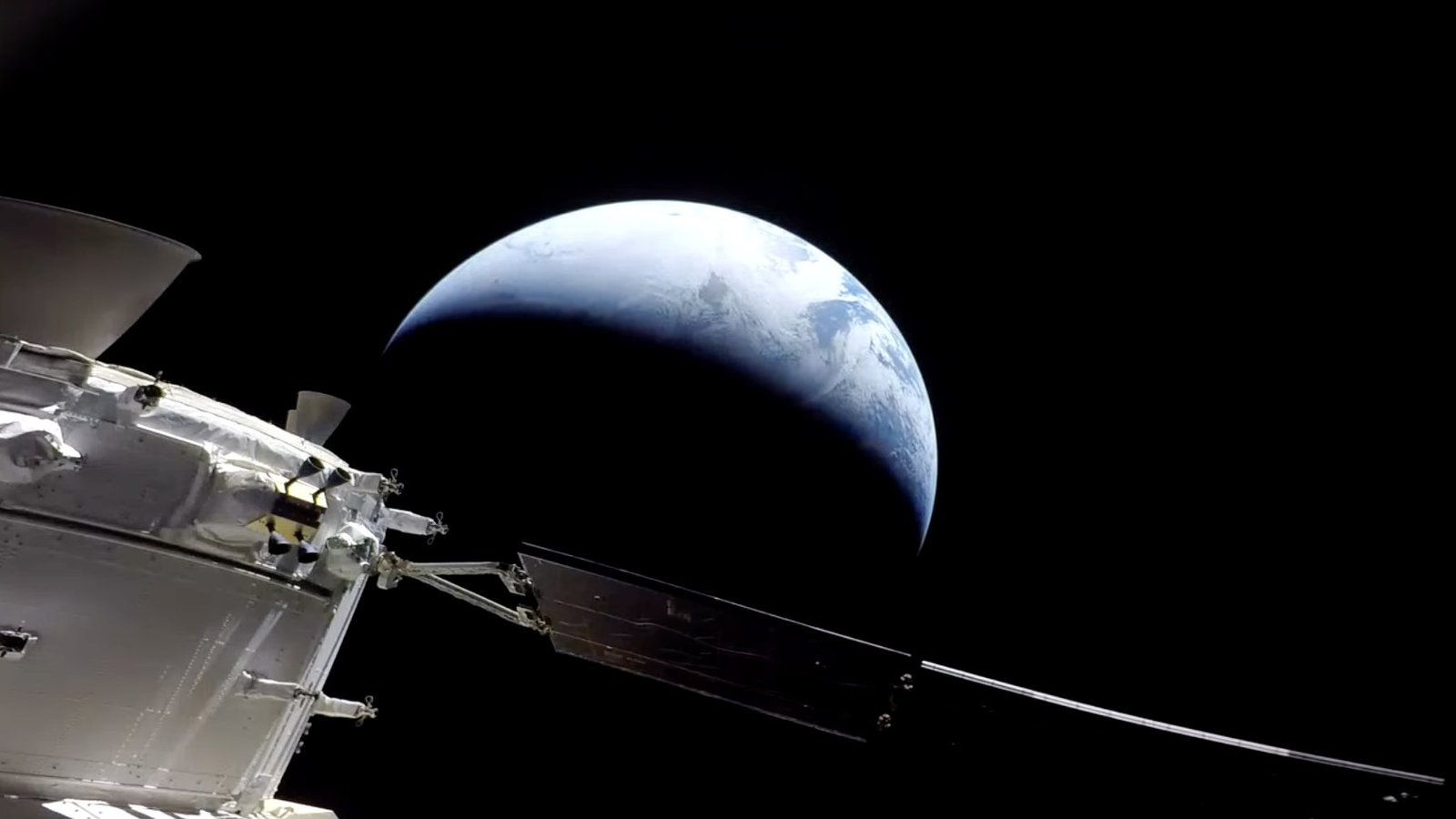
ASA’s Artemis I mission successfully returned to Earth, marking a major milestone in the agency’s long-term goal of returning humans to the Moon and eventually sending astronauts to Mars. This uncrewed test flight, part of the broader Artemis program, was designed to test the systems and technologies necessary for future crewed missions. The mission’s successful completion represents a significant achievement not only for NASA but also for the future of space exploration.
The Artemis I mission launched from the Kennedy Space Center in Florida aboard the Space Launch System (SLS), NASA’s most powerful rocket to date. The SLS is a key component of NASA’s strategy to establish a sustainable human presence on the Moon and beyond. Alongside the SLS was the Orion spacecraft, which serves as the vehicle for astronauts to travel to the Moon and other deep space destinations. Although no astronauts were onboard for this mission, Artemis I’s primary objective was to test the spacecraft's systems in a real-world environment and ensure that the crewed missions that follow will be safe and effective.
One of the most exciting aspects of the Artemis I mission was its trajectory, which took the Orion spacecraft around the Moon before returning to Earth. The spacecraft traveled nearly 1.4 million miles (2.3 million kilometers), completing a series of complex maneuvers that demonstrated its ability to operate in deep space. The mission provided valuable data on the spacecraft’s performance, including its heat shield, propulsion system, and communication capabilities, which will be crucial for future crewed missions.
The mission also tested the SLS rocket’s capabilities, which will be essential for sending astronauts on deep space exploration missions. The SLS rocket is designed to carry heavy payloads, such as the Orion spacecraft, into space. Its successful launch and flight demonstrated that the rocket can handle the extreme conditions of space travel and that it is ready for future missions, including the upcoming crewed Artemis II mission.
After its lunar flyby, the Orion spacecraft re-entered Earth’s atmosphere at speeds of over 24,000 miles per hour (39,000 kilometers per hour), subjecting it to extreme heat and pressure. The spacecraft’s heat shield, designed to protect it during re-entry, performed as expected, withstanding temperatures that exceeded 5,000 degrees Fahrenheit (2,800 degrees Celsius). This successful re-entry was a crucial test for the crewed missions that will follow, as the ability to safely return to Earth is a critical component of human space travel.
The Artemis I mission’s successful conclusion is a testament to the hard work and dedication of the teams involved, and it provides the foundation for future lunar missions. It also signals a new era in space exploration, where humans will return to the Moon, this time with the goal of establishing a permanent presence. NASA aims to land the first woman and the first person of color on the Moon during Artemis III, which is slated to take place in the coming years.